
Storing Your Backup to Dropbox
Dropbox is a cloud storage service for storing and managing files. Connecting it to Duplicator Pro makes it easy to send backup files there, easing the load on the web server and safeguarding the site against data loss.
This guide walks through connecting Dropbox as a storage location for Duplicator Pro backups, creating a backup that uploads there, and restoring a site from a backup stored on Dropbox.
Connect Dropbox Account
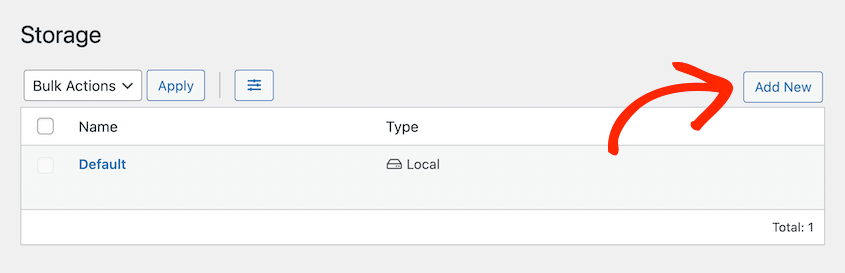
1. Go to Duplicator Pro » Storage. Here, the local storage option is already listed. To add Dropbox, click Add New:
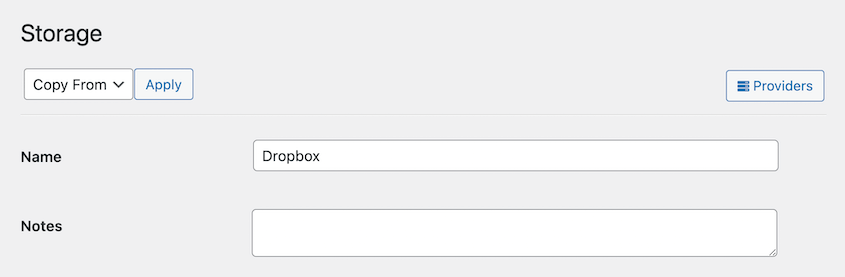
2. Go ahead and name the storage so that it’s easily identifiable later. You can also add any notes if needed:
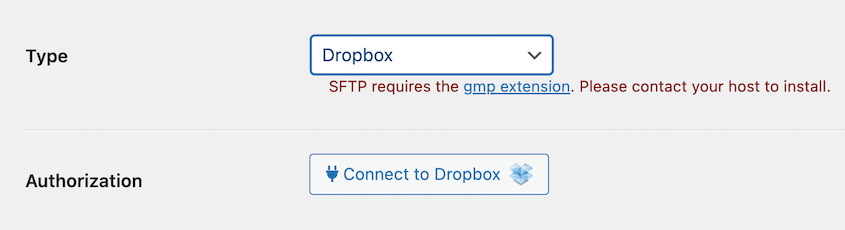
3. Under Type, select Dropbox. Then, hit Connect to Dropbox:
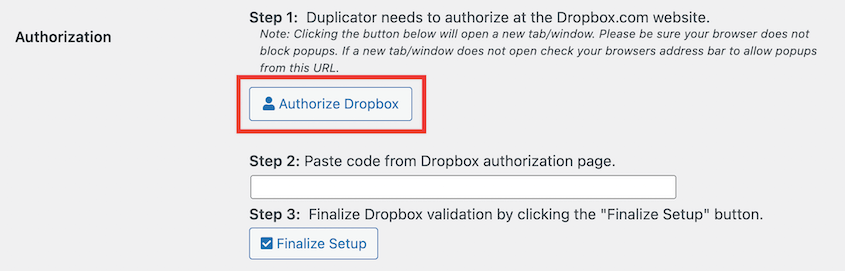
4. Now you’ll see new steps for connecting your Dropbox account. Click on Authorize Dropbox to open Dropbox in a new tab:
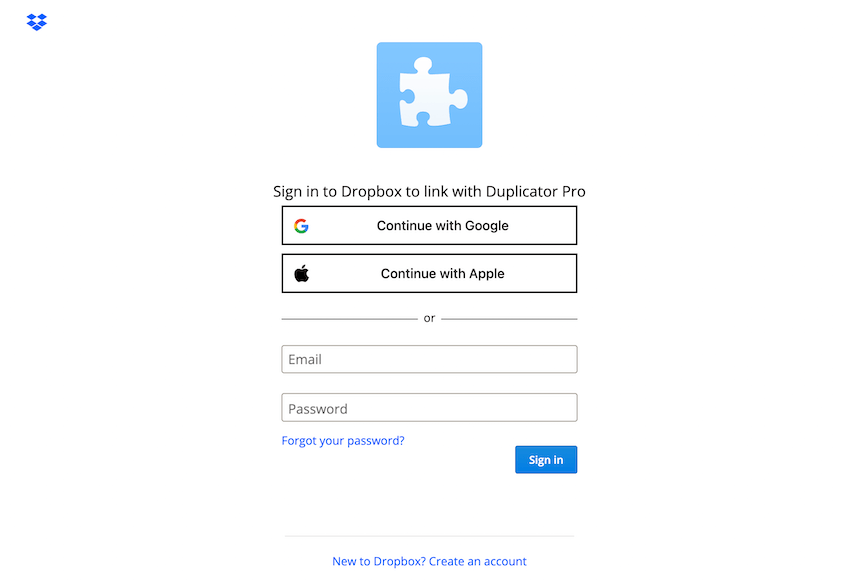
5. Sign in to the Dropbox account, or create a new one:
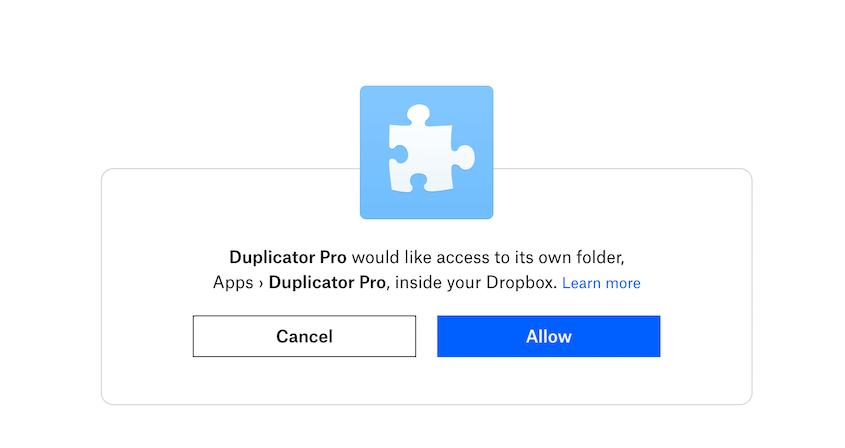
6. After you’re logged into your account, you’ll be prompted to authorize the connection. Simply hit Allow to let Duplicator Pro access a specific folder in your Dropbox.
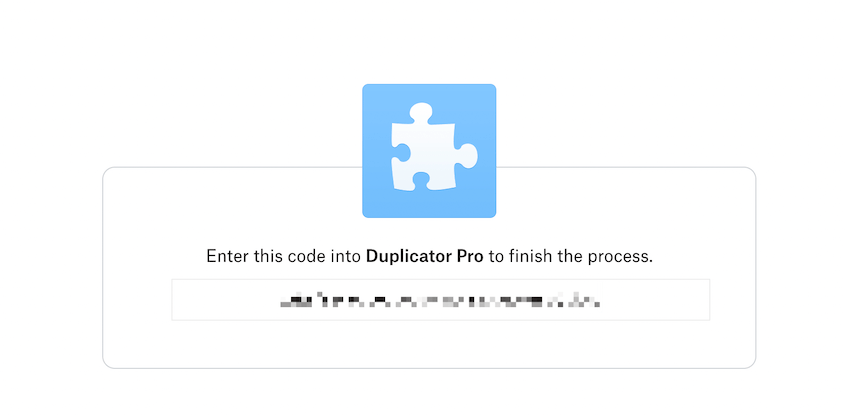
7. Dropbox will then give you an authentication code. Copy this and go back to your WordPress admin dashboard:
8. For Step 2 of the Authorization section, paste the authorization code. Then, click on Finalize Setup:
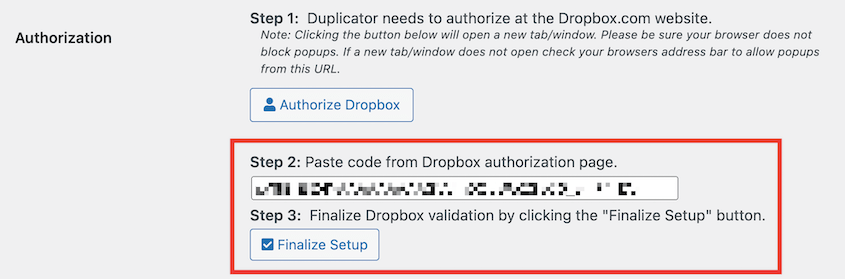
9. This adds Dropbox as a new storage location for backups.
10. Adjust the Max Backups field to limit how many backups Duplicator Pro keeps in this Dropbox folder. Once the limit is exceeded, the oldest backup is deleted.
11. Click Test Storage to confirm the setup works. If Duplicator can create and delete a small file in the Dropbox folder, the new storage location is ready. If the test fails, see Troubleshooting Dropbox Storage Issues.
Create and store a backup on Dropbox
With Dropbox connected, it’s time to store the first backup to the cloud. Go to Duplicator Pro » Backups » Create New:
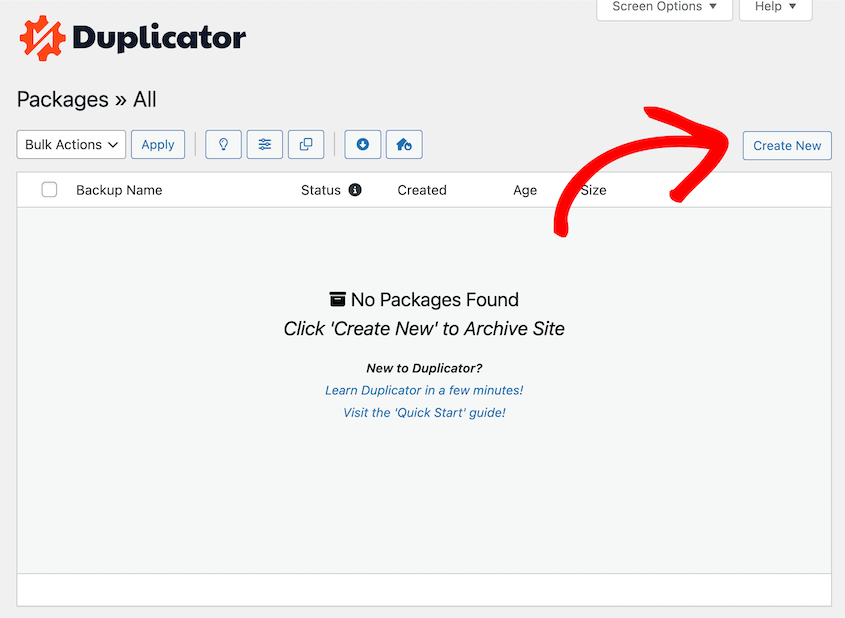
Duplicator automatically generates a name for the backup, but it can be renamed to something more memorable to make it easier to find later if it needs to be restored.
Next, expand the Storage settings and select Dropbox from the list of connected storage locations. Usually, a full backup of the WordPress site’s files and database is the right choice; don’t make any changes to the archive or installer files before clicking Next.

After configuring the backup, Duplicator scans the website. Review this evaluation for any issues. To continue, click Build:
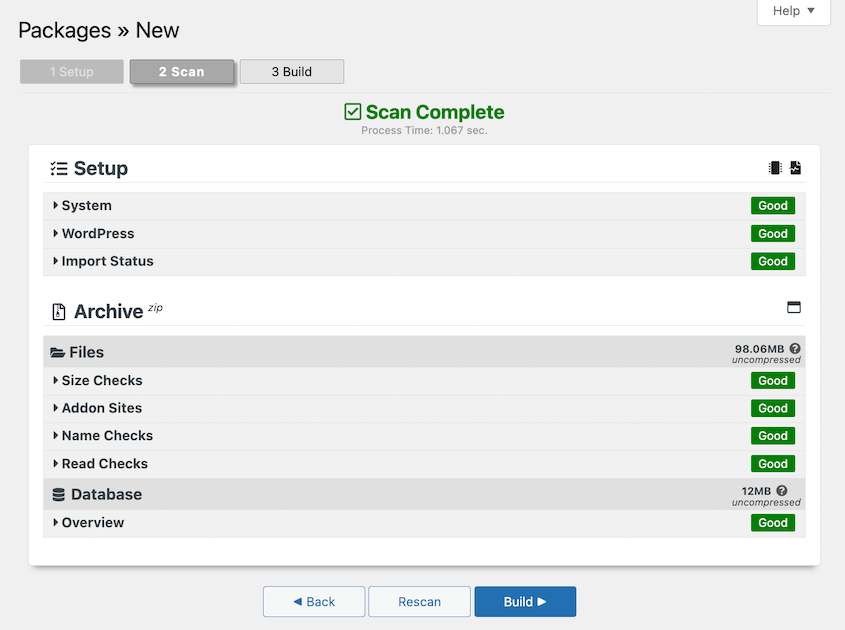
When Duplicator finishes building the backup, it’s transferred to the Dropbox folder connected earlier.
Restore your website using backups stored on Dropbox
Duplicator Pro offers multiple ways to restore backups. If backups have been uploaded to Dropbox using Duplicator Pro, the website can easily be restored to a previous version or recovered in case of a crash.
Use the Download option to restore your website:
- Go to Duplicator Pro » Backups
Use a backup stored on Dropbox to restore your website:
Open the Dropbox account and find the folder with the Duplicator backups. Select the archive file and download it.
Then, open the WordPress dashboard and go to Duplicator Pro » Import. Instead of manually uploading the file to a File Manager or File Transfer Protocol (FTP) client, the backup can be imported directly:
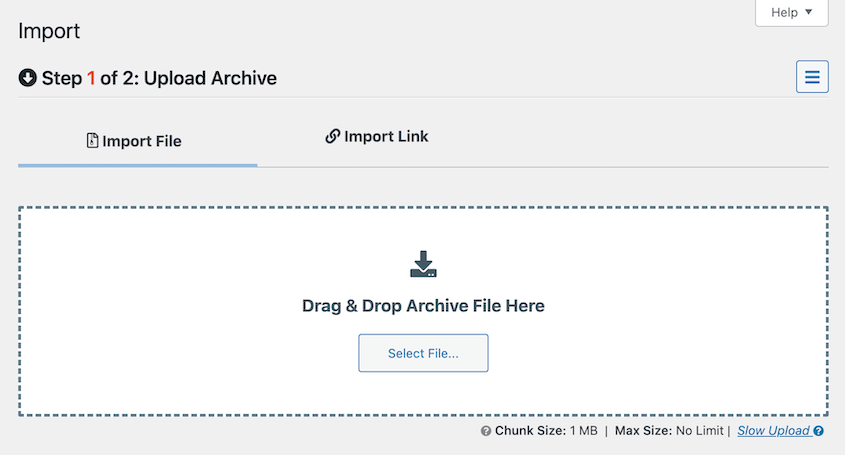
Drag and drop the archive file into the upload box. After it uploads, information about the backup appears. If everything looks correct, continue to the next page.
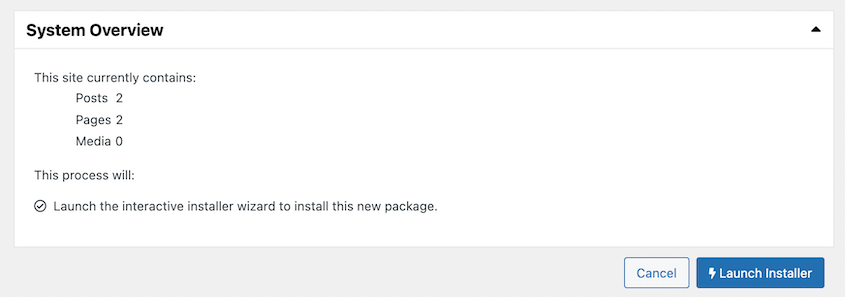
An overview of the current site appears next. To rewrite it with the uploaded archive, click Launch Installer:
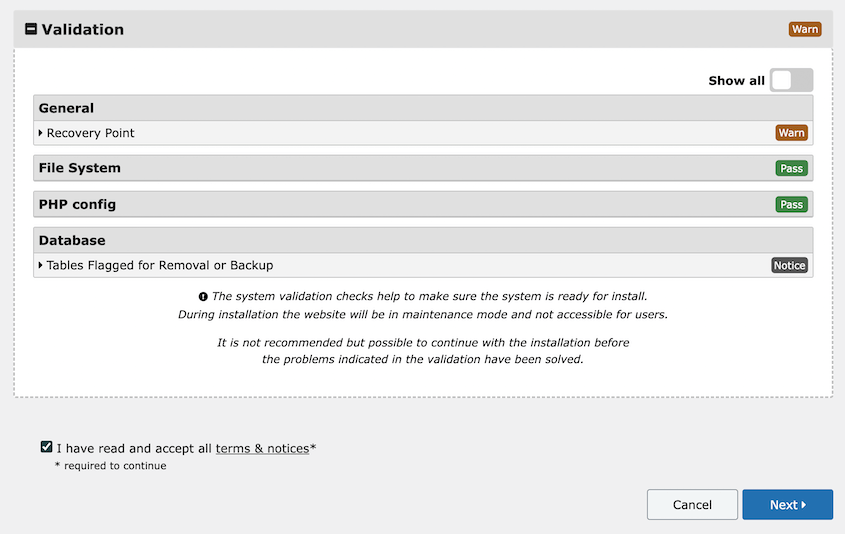
The Duplicator recovery wizard then walks through the process of restoring a backup. Select Restore single site as the Install Type, click Validate, then accept the terms and notices and click Next:
As a final step, confirm the intent to proceed with the backup restoration. Duplicator automatically replaces the current site with the saved backup. Once finished, an Admin Login button appears, and the restored website is ready to sign back into.
With Dropbox connected, backups upload there automatically, giving the site a remote copy that stays available even if the WordPress server has a crash or a hosting issue.
To connect a different storage provider or compare available options, see Backup to the Cloud.