
Managing Server Resources for CPU, Memory and Disk
Having trouble with managing server resources for CPU, Memory and Disk using Duplicator Pro? This guide provides practical solutions to troubleshoot and resolve the issues effectively.
To begin with, make sure you are using the latest version of Duplicator Pro. Please check the changelog and system requirements.
Is your site running slow, timing out, or failing to build a backup because of a memory or disk space error? Duplicator gives you several ways to adjust PHP memory limits, reduce backup resource usage, and free up disk space so backups and migrations run smoothly even on budget hosting plans.
This guide walks through managing server resources for CPU, memory, and disk when using Duplicator, including how to raise PHP memory limits, optimize backup settings to lower resource usage, and check your available disk quota.
PHP Memory Limits
Hosting providers, particularly on shared or budget hosting plans, often set restrictive PHP memory limits. When a backup or restore exceeds that limit, PHP stops the process and shows an “Allowed Memory Exhausted” error, similar to: Fatal error: Out of memory (allocated 301989888) (tried to allocate 921600 bytes).
Option 1: Manually Adjust PHP Memory Limits
Raise the PHP memory limit using one of the following methods.
- Modify wp-config.php: Add
define('WP_MEMORY_LIMIT', '500M');near the top of the file. - Edit the .htaccess file: Add the following, adjusting the value as needed. This only works on servers running PHP as an Apache module (mod_php); it has no effect on PHP-FPM or CGI setups.
- Update the php.ini file: Set
memory_limit = 500M. The value must end in M for megabytes, not MB.
Option 2: Increase PHP Memory on Bitnami Servers
- Open httpd-app.conf in the apps/wordpress/conf folder.
- Modify the php_value memory_limit setting.
Verifying Memory Allocation
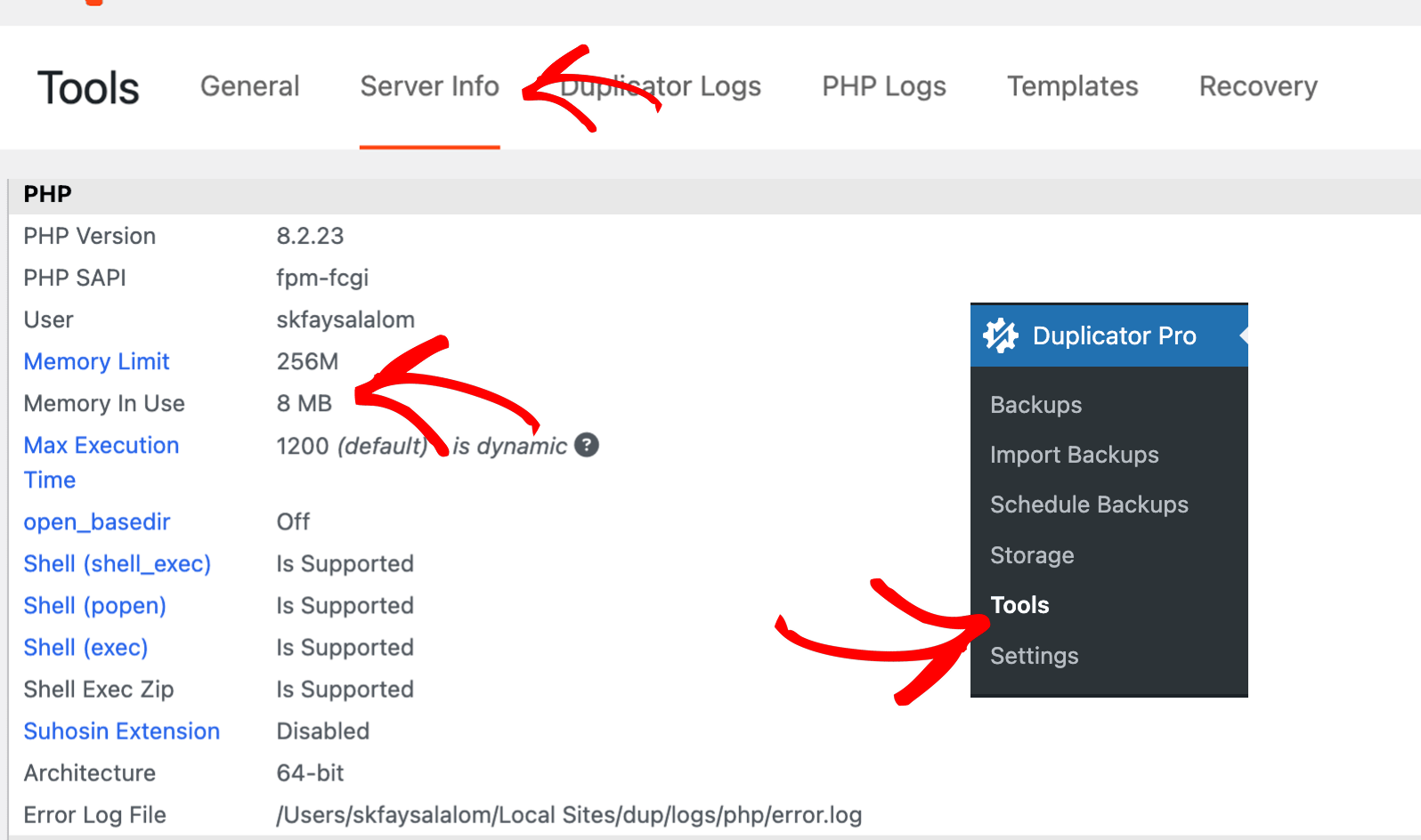
Navigate to Duplicator Pro > Tools > System, then check the PHP section for the current Memory Limit value.
Recommended Memory Adjustment
- Increase the memory limit by 50 percent beyond the previous allocation.
- If errors persist, raise it to 100 percent above the previous allocated limit.
Optimizing Backups to Reduce Memory Usage
- Enable Mysqldump:
Go to Settings > Backups > Database and set SQL Mode to Mysqldump. This offloads the database export to the mysqldump binary instead of processing it in PHP, reducing memory usage.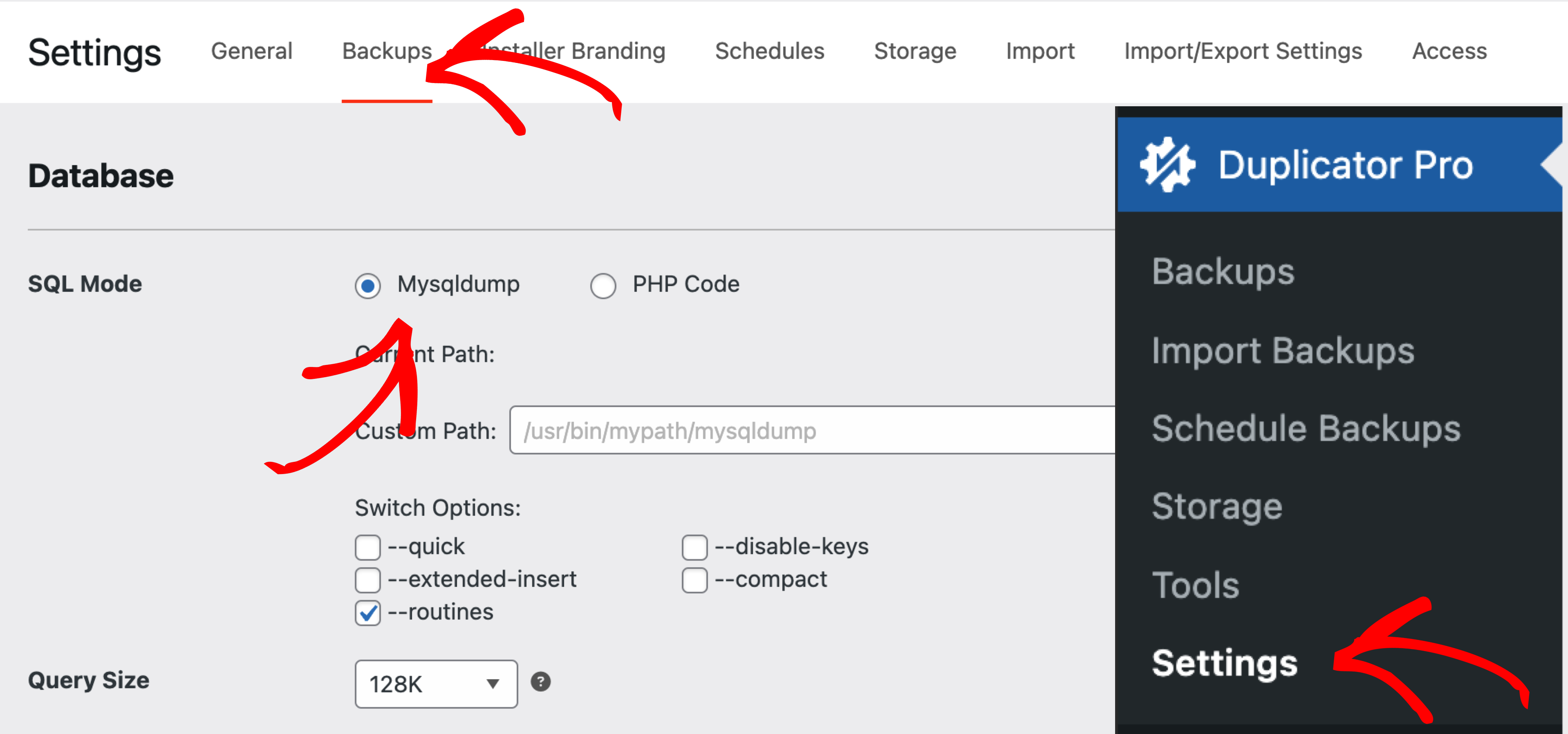
- Use an efficient archive engine:
Go to Settings > Backups > Archive and set Archive Engine to DupArchive or Shell Zip instead of ZipArchive. Shell Zip depends on shell access being available on the server.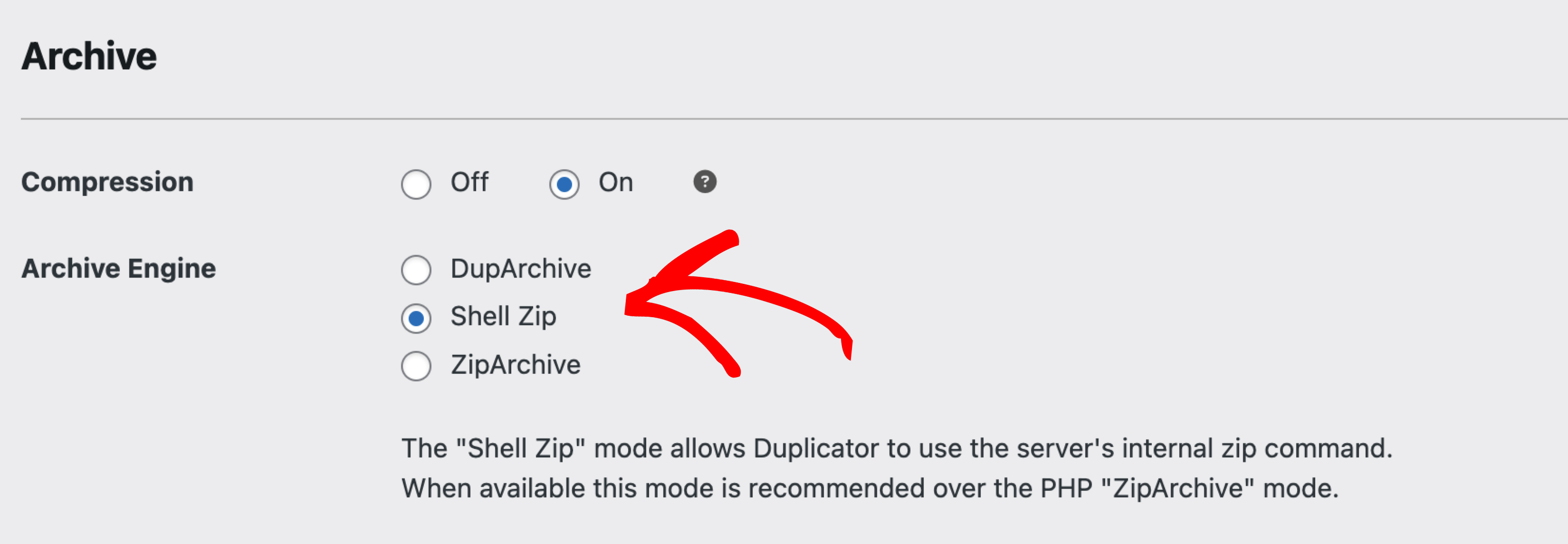
- Adjust server throttling (Pro):
Go to Settings > Backups > Processing and set Server Throttle to Low, Medium, or High. Higher values slow the backup process down to prevent overloading the server.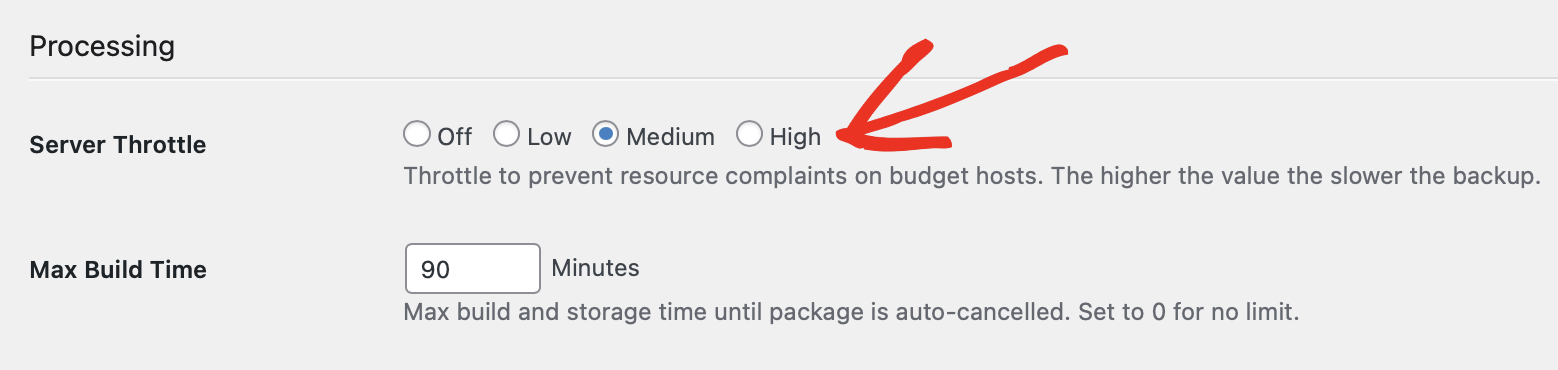
Disk Quota Limitations
Running out of disk space during a backup produces an error similar to: ZipArchive::close(): Write error: No space left on device.
Understanding Disk Quota Limits
Many hosts advertise unlimited storage but still impose a quota per account under their terms and conditions. Check with your hosting provider for the exact limit on your plan.
Freeing Up Disk Space
- Delete unused files and folders, old backups, outdated plugins, and unused media.
- Remove backup files left behind by other backup plugins.
- Optimize the database using phpMyAdmin or a dedicated optimization plugin.
Checking Disk Quota on Popular Hosting Providers
Check current disk usage directly with your host: Godaddy, Bluehost, or CPanel Systems.
Managing Server Load on Budget Hosts
Adjust Duplicator Pro Backup Settings
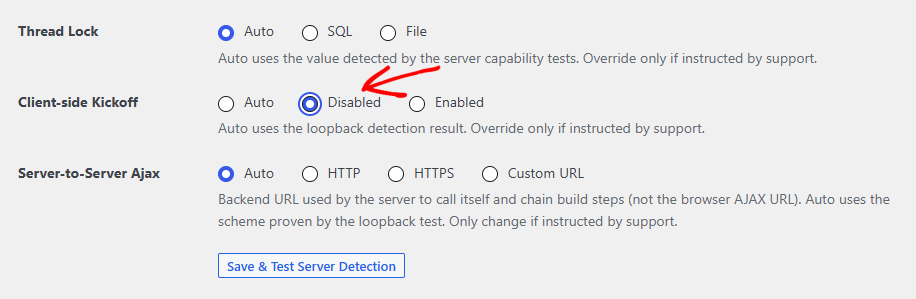
Client-side Kickoff. Go to Settings > Backups > Server Detection and check the Client-side Kickoff setting. Set it to Auto, the recommended and default option. Auto runs a loopback connectivity test and uses the result to decide automatically whether the browser or the server drives each backup step, so it needs no manual adjustment. Only switch it to Enabled or Disabled if instructed by support.
Modify server throttling. Go to Settings > Backups > Processing and set Server Throttle to Low or Medium to reduce CPU strain on budget hosting plans.
Increase Max Build Time. In the same Settings > Backups > Processing section, the Max Build Time field is measured in minutes, not seconds. Raise this value if backups are timing out on a slow or heavily throttled server.
Optimize Backup Strategy
- Use file filters to exclude large, non-essential files, including unused default WordPress themes that ship with core but are not active on the site.
- Schedule smart backups: run database-only backups daily and full site backups weekly.
Upgrade Your Hosting Plan If Necessary
Lower-end shared hosting plans often restrict CPU usage and available RAM, which can lead to ongoing performance issues no matter how backup settings are tuned. If resource limits are consistently hit, upgrading to a plan with more CPU and memory allowance resolves the problem directly.
Related Resources
- Troubleshooting Server Time Out Issues
- Tips for Migrating Large Websites
- Handling Backup Scan Notices
- Resolving 403/500/Timeout Issues on Step 3
That’s it! With PHP memory limits raised, backup settings optimized, and disk quota confirmed, the site is set up to run backups and migrations without hitting server resource errors.
Running into a scan warning before a backup even starts? Check out our guide on Handling Backup Scan Notices.