

7 Best File Upload Plugins for WordPress (2026): Tested & Ranked
 Joella Dunn
Joella Dunn
Joella Dunn
 John Turner
John Turner
John Turner
WordPress has no built-in file upload capability for site visitors. None. If a job applicant, client, or customer needs to submit a file to your site, the default installation gives them nowhere to do it.
A file upload plugin closes that gap. But the wrong one will leave you fighting arbitrary file size limits, file type restrictions that don’t actually block anything dangerous, or a form UI that drives users away before they finish uploading.
We installed and tested eight plugins across different scenarios: simple contact form attachments, resume submissions, large video files, membership portals, and digital product storefronts. Here’s what each one does well and where each one falls short.
The key takeaways:
- Best overall: WPForms: file upload fields baked into a drag-and-drop form builder with 6 million active installs
- Best free standalone option: WordPress File Upload: 200K+ installs, no form builder required, works straight out of the box
- Best for developers: Gravity Forms: conditional logic, webhook support, and a full REST API at $59/year
- Best for membership sites: MemberPress: file uploads built directly into the member portal without a separate plugin
- Best for selling digital files: Easy Digital Downloads: built specifically for file delivery after payment, not just collection
- Before you install any of these: Back up your site with Duplicator first. It takes two minutes. If the new plugin conflicts with something, you restore in one click rather than debugging a broken site.
Table of Contents
WordPress File Upload Plugins at a Glance
| Plugin | Best For | Free Version? | Premium Pricing |
| WPForms | Overall / beginners | Yes | $49.50/yr |
| Formidable Forms | Complex forms and data | Yes | $39.50/yr |
| Gravity Forms | Developers | No | $59/yr |
| WordPress File Upload | Free standalone uploads | Yes | €40.00 one-time |
| MemberPress | Membership sites | No | $199.50/yr |
| Easy Digital Downloads | Selling digital files | Yes | $99.50/yr |
| File Manager | Frontend file management | Yes | $39 one-time |
Why Use a File Upload Plugin?
By default, you can only upload files to your WordPress site by logging into the admin dashboard. However, you might want your audience to upload files without having to create new user accounts.
With a file upload plugin, you can start accepting file uploads from front-end visitors. Since you won’t have to create new users, your dashboard will stay secure.
Once you add file upload functionality to your contact forms, users can send you images, documents, videos, documents, and more.
Here are some ways to use a file upload plugin:
- Accept medical forms
- Add images to identify new members
- Review resumes for job applications
- Verify identification with ID uploads
- Collect essays for a scholarship application
- Review guest posts submissions
Key Features to Consider in a WordPress File Upload Plugin
Multi-File Uploads
You won’t want users to have to submit the form multiple times. With the right plugin, they can upload several files at the same time, saving time and improving user experience.
Extensive File Support
The best file upload plugin should support many types of files. This includes popular ones such as MP3, MP4, JPG, PNG, GIF, and PDF, to less-known types like SVG and WEBM.
File Size Limit
Ideally, the best file upload plugin should allow you to upload large files. If a plugin has a low file size limit, it could be a hassle when users need to share large files.
Security
Since files may contain sensitive information, choose a plugin that encrypts the files during upload and also stores them securely.
Our Favorite File Upload Plugins for WordPress
By now, you know what to look for in a file upload plugin. But, there are still countless options to choose from.
To help you, I’ll review the best file upload plugins for WordPress. Each plugin has been screened by our in-house WordPress experts, so you can find the perfect fit for your requirements.
1. WPForms

I found WPForms to be the best file upload plugin. It stood out because of its user-friendly drag-and-drop builder that required no coding skills to use.
When you need to add file upload functionality to a form, simply drag and drop the File Upload field onto the page.
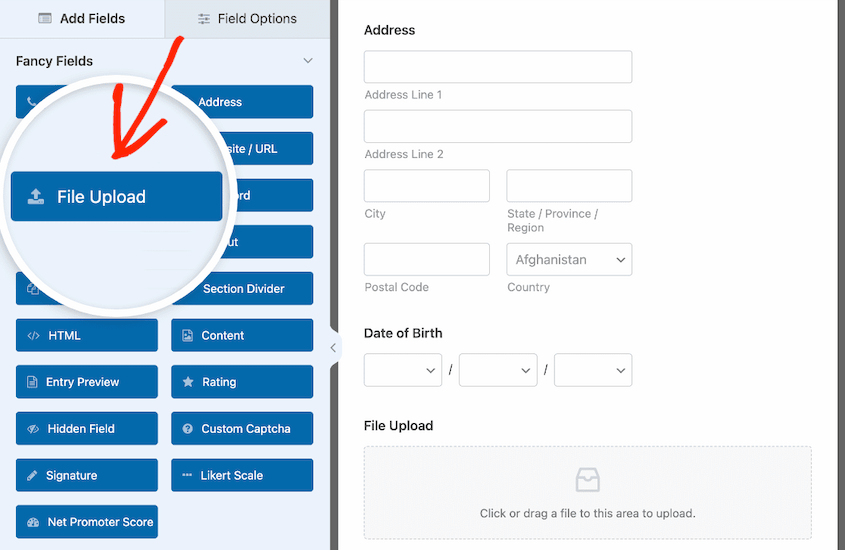
WPForms also has pre-made templates with built-in file upload fields. For example, the Job Application template allows users to add their resume and cover letters.
Since this is automatically set up, it can save you valuable time.

The file upload field can have a variety of uses. Here are the file types it supports:
- Image files including .png, .gif, and .jpg
- Audio files including .wav, .mp3, and .mp4
- Video files including .mpg, .mov, and .wmv
- Documents like .doc, .xls, .ppt, and .pdf
You can easily restrict what file types you’re accepting in a form submission.
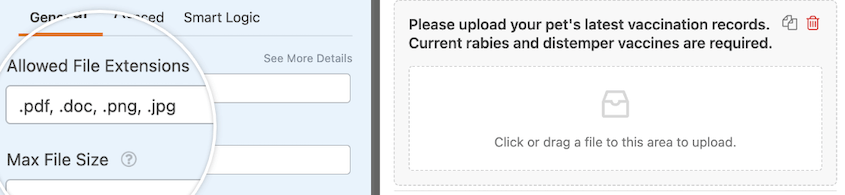
Your web host will have a maximum file upload limit for your site. To avoid going over this value, feel free to set a maximum file size in WPForms.
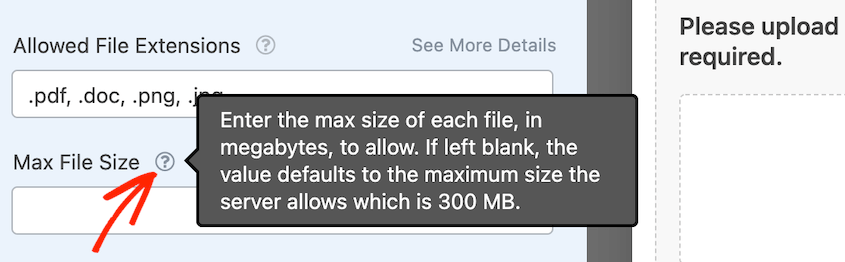
You can also allow users to add multiple files in one form.

This makes it easy for your online visitors to give all their information in one entry. Plus, your entry management will become much more efficient.
What We Liked About WPForms
- User-friendly interface
- Wide range of form templates
- Easy-to-use file upload fields
- Two file upload formats: modern and classic
- Supports a variety of file types
- Flexible maximum file upload limit
- Supports multiple file uploads
- Set file type restrictions
- Automatically store files in the media library
- Easy entry management
- Email notifications for new entries
- Supports conditional logic, so only the right users see file upload fields
What We Didn’t Like About WPForms
- The file upload field is a premium feature
Why WPForms Is Our Top Pick
WPForms is the best file upload plugin for WordPress because it has pre-made templates with already integrated file upload functionality. But, you’ll have the option of adding a file upload field to any form. This is flexible, ensuring you only get the best responses.
2. Formidable Forms

Similar to WPForms, Formidable Forms is a drag-and-drop WordPress form builder with a file upload field. It comes with templates for everything from business operations to user registrations.
When you need users to upload files, add the file upload field. New file submissions will then be stored in your media library.

With Formidable Forms, you can allow multiple files to be uploaded. One unique feature is that it can delete old files when you delete an entry, which declutters your media library.
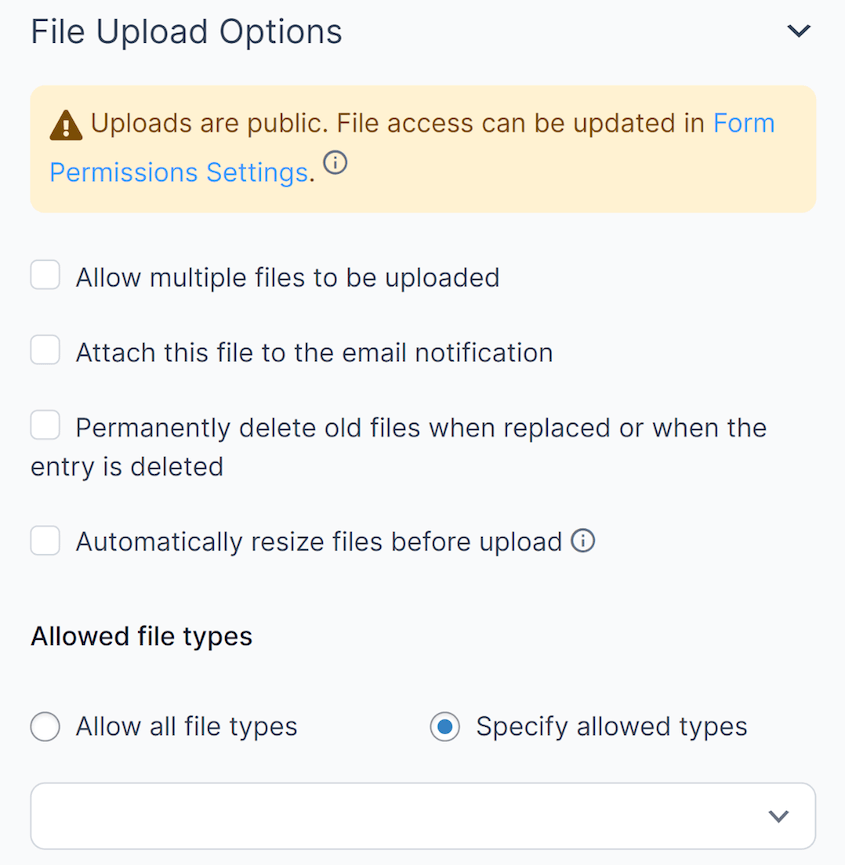
Formidable Forms allows all form types that are supported by WordPress. However, it will automatically only support images by default. This is to prevent possible security risks from public uploads.
What We Liked About Formidable Forms
- Drag-and-drop form builder
- Hundreds of form templates
- Supports all file types supported by WordPress
- Option to restrict file sizes
- Accepts multiple file uploads
- Can resize images automatically
What We Didn’t Like About Formidable Forms
- You’ll need to upgrade to the premium version to access the file upload option.
- Automatically restricts file upload types to images (although this is for security reasons)
- Only one upload field style
Why We Chose Formidable Forms
Formidable Forms gives you everything you need to start accepting file uploads from your site. It’s flexible and supports unique features like auto image resizing.
3. Gravity Forms
Another form builder with file upload features is Gravity Forms. It allows you to create new forms and easily add a file upload field.
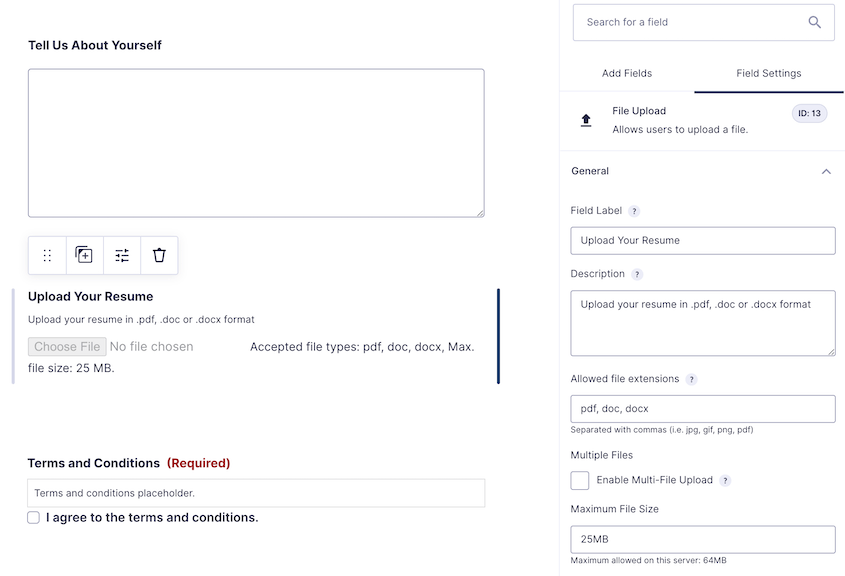
You can customize the field label and description so that users know exactly what you’re asking for. Additionally, you’ll be able to limit the file type and maximum upload size.
Gravity Forms can also send any file submissions to the cloud. It integrates with cloud services like Dropbox and Google Drive so you never lose any data.

What We Liked About Gravity Forms
- Drag-and-drop form builder
- Custom maximum file size
- Multiple file upload capability
- Integrates with cloud storage
What We Didn’t Like About Gravity Forms
- Gravity Forms is a premium plugin, so there’s no free version
- High premium pricing
Why We Chose Gravity Forms
Gravity Forms’ solid file upload management features make it a compelling choice.
4. WordPress File Upload

WordPress File Upload (now Iptanus File Upload) does one thing well. It lets visitors upload files to your site without a full form builder.
It has over 200,000 active installs, a shortcode-based setup that takes about three minutes, and a genuinely useful free version. If you don’t need a contact form, just a clean upload interface, this is the most straightforward path.
What We Liked About WordPress File Upload
- Free version is complete for most simple upload needs.
- Shortcode works in posts, pages, and widgets. No page builder required.
- File type and extension restrictions are configurable without touching code.
- Admin notification emails include the uploaded file or a direct download link.
- User confirmation messages are customizable.
What We Didn’t Like About WordPress File Upload
- No drag-and-drop builder. If you want surrounding fields (name, email, message), manage them separately.
- The interface is functional but plain. It won’t match polished modern sites without custom CSS.
- Cloud storage routing (S3, Google Drive) requires the premium version.
Why We Chose WordPress File Upload
The use case is narrow but real: you want users to be able to upload a file, and you don’t need the surrounding form fields. The shortcode [wordpress_file_upload] places a clean upload interface anywhere on your site.
The free version handles file type restrictions, upload size limits, and admin email notifications. Premium adds login requirements, upload progress bars, and direct-to-S3 routing.
5. MemberPress

MemberPress is a WordPress membership plugin. On top of managing subscriptions and content access, it also offers a file upload feature.
This allows users to easily upload files to registration forms. You might find this useful if you need a new member’s identification or other documents before onboarding them.
You can easily do this in the Fields settings. Simply select the File Upload type and have it show up as they’re registering.

What We Liked About MemberPress
- Adds file upload functionality to membership sites
- File access restriction
- Upload files and track how many members download them
- Extra membership features to create paywalls, recurring subscriptions, and more
What We Didn’t Like About MemberPress
- It’s best suited for a membership website.
- There’s no free version.
Why We Chose MemberPress
MemberPress is a great choice for membership sites that need to request documents from users during the registration process. Plus, it helps you restrict files so that only the right users can access them.
6. Easy Digital Downloads
Easy Digital Downloads is the ultimate plugin if you’re selling digital products on your WordPress website. I found it extremely user-friendly and loved that it’s tailor-made for the e-commerce space.
Along with selling digital products, you can use EDD to request files as customers check out. You might need this, for example, to use someone’s business logo on a custom t-shirt.
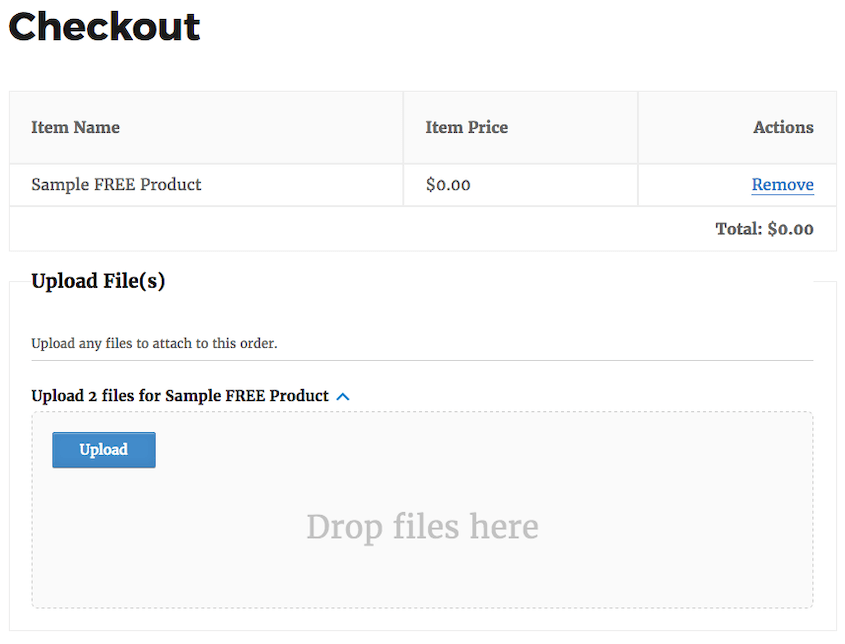
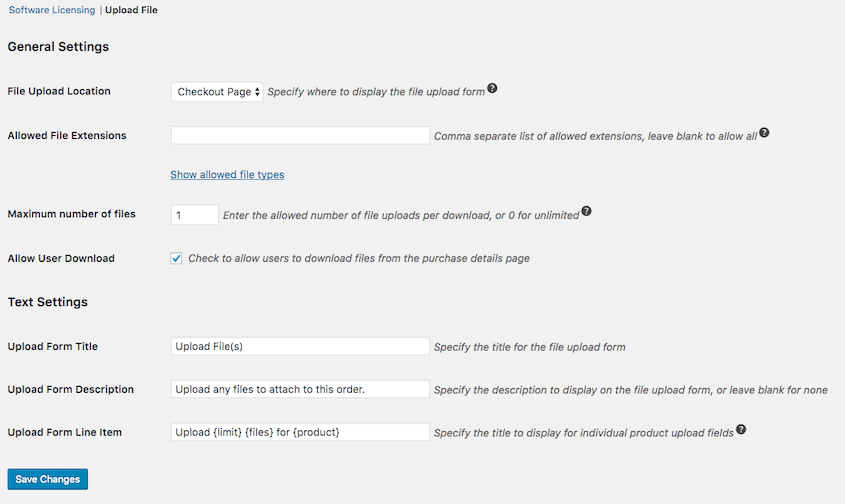
With EDD’s Upload File extension, the file upload field can be set to any location on your e-commerce site. You can also lower the maximum number of files uploaded or customize the allowed file extensions.
What We Liked About Easy Digital Downloads
- File upload fields for checkout pages or other locations
- Enable upload file functionality for each product
- Allow users to re-download uploaded files
- Attaches uploaded files to specific products
- Access files on the Purchase History page
What We Didn’t Like About Easy Digital Downloads
- Requires a premium EDD license.
Why We Chose Easy Digital Downloads
Easy Digital Downloads is perfect for businesses that need users to upload files so that they can create custom orders.
7. File Manager
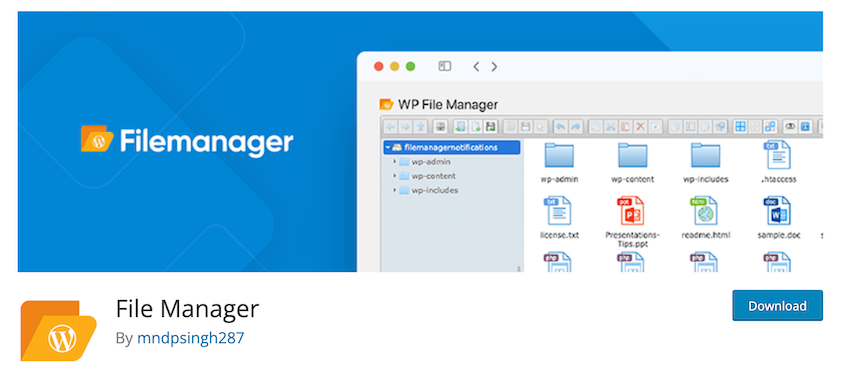
File Manager is a WordPress plugin that lives up to its name. It allows you to edit, download, and upload files without using a File Transfer Protocol (FTP) client. Essentially, you’ll get a more user-friendly file manager right in your WordPress dashboard.
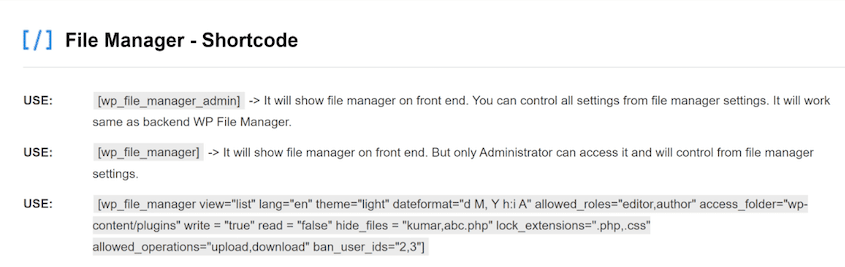
This plugin can help you edit code on the back end, but it can also be displayed on the front end of your site. With a shortcode, you can embed a file manager anywhere on your site.
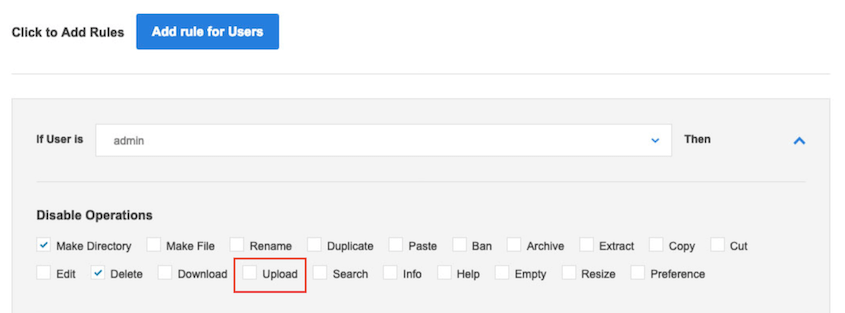
Don’t worry about unauthorized users editing your site files. You can add rules that disable certain operations. For example, you could only enable the upload functionality.
What We Liked About File Manager
- Use many operations on files and folders within your admin dashboard
- Drag and drop files to move them
- Control permissions for what files can be uploaded or downloaded
- Integrated development environment
- Share files by email
- Preview media files
- Backup and restore functionality
What We Didn’t Like About File Manager
- User restriction settings are limited to the pro version.
- More complicated process for front-end file uploads.
Why We Chose File Manager
You should use File Manager if you want an easier way to control site files without a separate control panel or FTP client. Since it works on the front end, it can also be a file upload plugin.
Bonus File Upload Plugin: Duplicator
So far, we’ve mentioned plugins that add file upload fields to the front end of your website. But what if you want an easier way to upload files to your dashboard?
Unfortunately, the native WordPress importer isn’t a great tool for transferring a custom theme or existing media library into your site. It only supports XML or WXR files.
So, when you’re planning on importing your old content into a new website, you’ll need a better tool.
That’s where Duplicator can help. Duplicator is a WordPress backup and migration plugin that simplifies file imports and exports.
With Duplicator, you can create a downloadable zip file with all of the files you want to export. The plugin makes it easy to download active themes, plugins, WordPress files, and database tables.
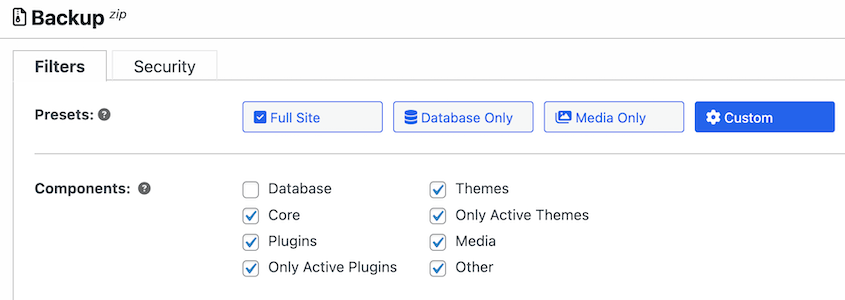
Once you download this backup, you can easily upload it to another WordPress site. All you’ll need to do is install Duplicator and find the Import page.
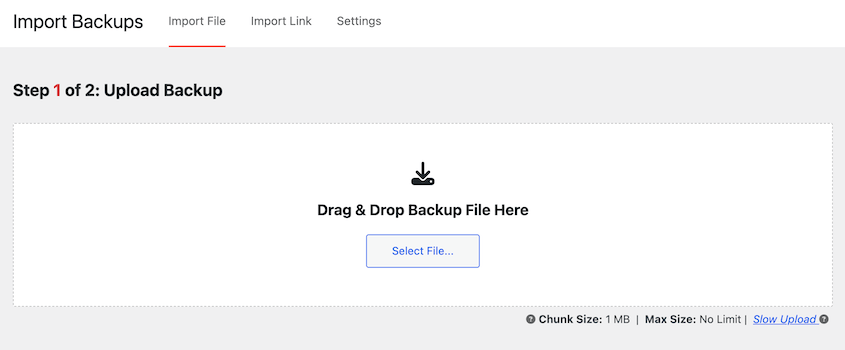
This gives you the flexibility to migrate your site to a new host, server, or domain name. If you re-upload a backup to your own site, Duplicator can also help restore your data after crashes or other errors.
FAQs About File Upload Plugins
What is the best free file upload form plugin for WordPress?
If you need a completely free file upload form plugin, I’d recommend WordPress File Upload. This plugin can add a file upload field to any post, page, or sidebar. However, if you want more flexible and comprehensive form editing options, consider using WPForms, the best contact form plugin.
What is the best big file uploads plugin?
WPForms is the best big file uploads plugin. You can easily add a file upload field to any contact form and adjust its max file size. Big File Uploads is another tool that helps your users upload large files to your website.
What is the best front end upload file plugin for WordPress?
The best front-end upload file plugin for WordPress is WPForms. With this tool, you can create any type of form that you want front-end visitors to use. Since it has a variety of fields, you’ll be able to add file upload functionality without any effort.
What is the best WordPress plugin for multiple file uploads?
For multiple file uploads, I recommend WPForms. If you want users to add multiple files to your forms, all you’ll need to do is customize the maximum file number.
How do I create a file upload form in WordPress?
To create a file upload form, first install WPForms Pro. Then, feel free to select a pre-designed form template or start from scratch. Finally, find the file upload field and drag and drop it into the form.
Pick Your Plugin, Then Back Up Before You Install
For most sites, WPForms handles file uploads. If you want a free and simple option, WordPress File Upload gets there faster. For developers, I’d recommend Gravity Forms.
Whatever you pick, do one thing first: run a full-site backup.
A new plugin can conflict with your theme, your caching layer, or an existing plugin you didn’t expect. If that happens, a fresh backup means you restore in one click and try a different approach. Without one, you’re debugging a broken site.
Duplicator handles the backup in two minutes. The free version of Duplicator creates a complete site package: database, files, everything. I install it on every site before touching anything on a live installation.
If you want to easily drag and drop site data to another location, store backups in the cloud, or restore in one click, upgrade to Duplicator Pro!
While you’re here, you may enjoy these extra WordPress tutorials:
- How to Import Files in WordPress
- 10 Best Free WordPress Backup Tools
- How to Clone a WordPress Site
- Ultimate Guide to WordPress Backup Files
- How to Download the WordPress Media Library
- 15 Best WordPress Themes to Build a Stunning Website